Why Typography Works Surprisingly Well for Puzzles
Typography may not be the first visual style that comes to mind when thinking about puzzles, yet it offers one of the most unique and creative themes in modern puzzle design. Letters, symbols, and expressive type forms create visual cues that are both engaging and challenging. When arranged thoughtfully, typography-based puzzles strike the perfect balance between artistic beauty and problem-solving depth. This makes them appealing to both beginners and seasoned enthusiasts looking for something refreshingly different.
Unlike scenic landscapes or fantasy illustrations, typography puzzles rely on the fundamental shapes of characters — curves, strokes, angles, and spacing — to guide the solver. These elements offer a distinct rhythm and structure that make the experience both intellectually stimulating and aesthetically bold.
The Elements of Typography That Translate Into Puzzle Design
Typography is full of visual details that lend themselves naturally to puzzle-solving. Here are the essential components designers use to craft compelling type-based scenes.
1. Letterforms as Visual Anchors
Letters have predictable shapes. Whether serif, sans-serif, or decorative, they give solvers recognizable anchors within the puzzle. Even when abstracted or stylized, letterforms maintain enough structure to guide piece placement.
2. Contrast and Hierarchy
Typography relies heavily on contrast — bold vs. thin, uppercase vs. lowercase, tight vs. loose spacing. These intentional contrasts create natural zones that make sorting easier while still offering satisfying challenges.
3. Color Integration
Designers often use bright gradients, neon tones, or minimal monochrome palettes to enhance legibility and visual drama. Color becomes an essential tool for organizing sections and adding excitement to typographic scenes.
Creative Ways Typography Can Shape Puzzle Themes
Typography isn’t just about arranging letters. It can be transformed into fully immersive puzzle themes with surprising depth.
Word Landscapes
Phrases and words can form mountains, rivers, or city skylines. This approach turns language into scenery, creating puzzles where every piece contributes to both structure and meaning.
Alphabet Art
Each letter becomes its own miniature artwork. Designers use different colors, textures, or illustration styles for each character, making the puzzle feel like a vibrant collage of shapes.
Typographic Illusions
Optical illusions built from letterforms challenge solvers to decode what they see. Overlapping characters, warped text, and layered effects introduce a uniquely playful difficulty.
Texture-Based Letter Designs
Textures such as wood grain, neon glow, metallic foil, or watercolor fill can add richness to simple letters. These small variations give solvers micro-patterns to focus on during assembly.
When Typography Makes Puzzles Easier — or Harder
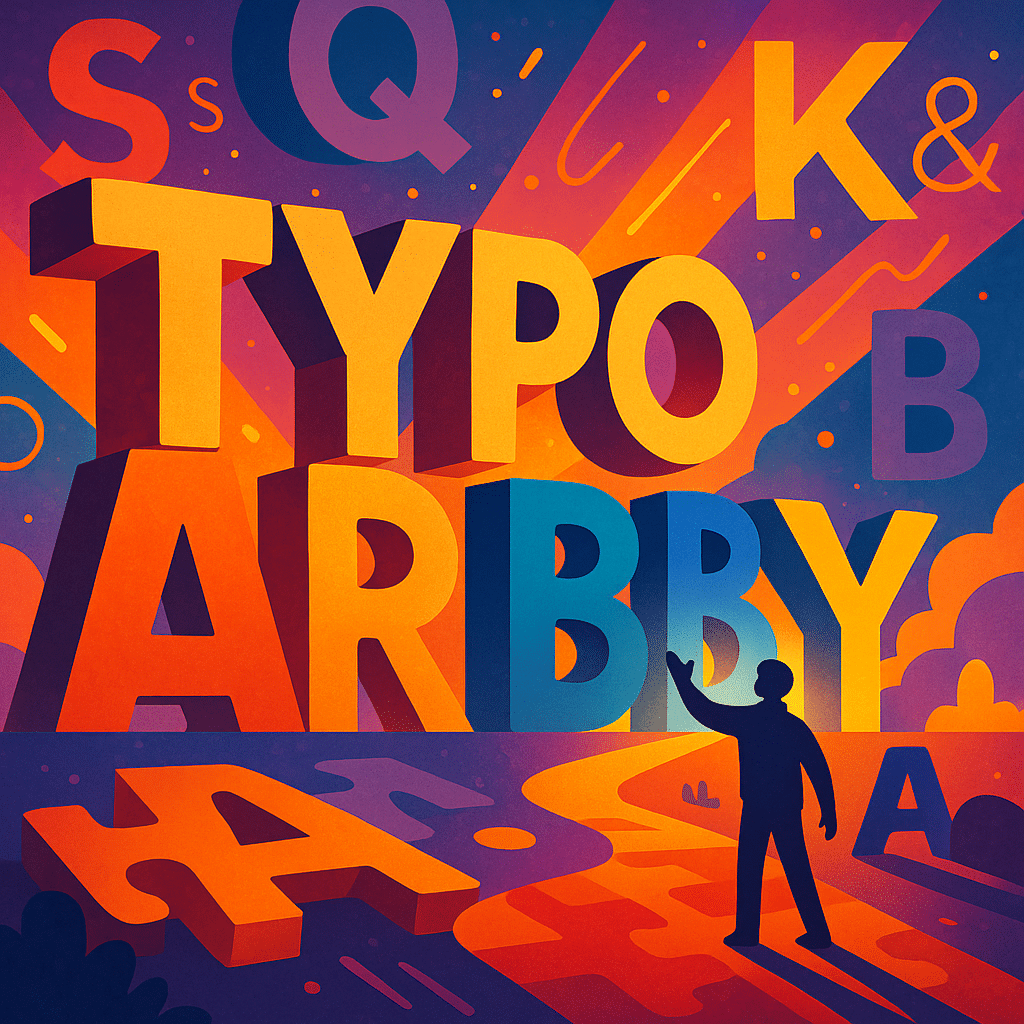
Not all typography puzzles share the same difficulty level. Their complexity depends on how designers manipulate spacing, repetition, and style.
| Design Choice | Effect on Difficulty |
|---|---|
| Bold, high-contrast letters | Makes piece sorting faster and easier |
| Repeating characters or patterns | Increases challenge due to similarity |
| Decorative or distorted type | Creates unpredictability and visual complexity |
| Monochrome palettes | Raises difficulty by removing color cues |
Designer Tips for Creating Typography-Themed Puzzles
If you’re planning to design your own type-based puzzles, here are practical guidelines to follow:
- Choose a strong typeface that remains visually distinct even when cut into small pieces.
- Use intentional spacing to create clear zones without losing the overall composition.
- Introduce texture to give solvers additional cues beyond letter shapes.
- Play with scale by mixing large headline letters with tiny text for dynamic contrast.
- Keep repetition balanced — too much makes the puzzle frustrating.
What Makes Typography Puzzles So Appealing?
Typography-based puzzles bring together art and logic in a way few other themes can. They invite solvers to appreciate the beauty of letterforms while challenging them to navigate shapes they already know well. This blend of familiarity and novelty makes typographic puzzles feel both approachable and thoughtfully designed.
“Typography turns language into visual architecture — and when used in puzzles, it becomes a playground for both creativity and precision.”
अंतिम विचार
Typography is an underexplored but highly versatile puzzle theme. Its mix of structure, rhythm, and expressive form creates a uniquely satisfying experience for solvers of all skill levels. Whether used for abstract compositions, word-based illustrations, or decorative alphabet art, typography opens the door to fresh creativity in puzzle design. For anyone seeking a modern, visually bold, and intellectually engaging theme, typographic puzzles are an exciting direction worth exploring.
प्रातिक्रिया दे