Why Contrast and Lighting Matter in Puzzle Design
When choosing a puzzle, most people focus on themes, colors, and piece count. Yet two of the most important elements for an enjoyable solving experience are contrast and lighting within the artwork. These visual characteristics determine how easily puzzlers can recognize patterns, group pieces, and progress through difficult sections. High-quality puzzles rely on strong contrast and thoughtful lighting to guide the eye, build momentum, and create a visually rewarding challenge.
What Is Contrast in Puzzle Artwork?
Contrast refers to the visual difference between colors, shapes, shadows, and highlights. When contrast is strong, edges appear sharper and sections of the image become easier to identify. When contrast is low, areas blend together, increasing difficulty but sometimes causing frustration. Puzzle designers must balance contrast to ensure the artwork remains both beautiful and functional.
The Role of Lighting in Puzzle Imagery
Lighting influences not only the mood of an image but also how easily a puzzler can distinguish between various sections. Light sources create shadows, reflections, and gradients — all of which provide subtle visual clues. Without intentional lighting, even the most detailed artwork can feel flat or confusing when converted into puzzle form.
“Good contrast guides your eyes. Good lighting tells your brain what you’re actually seeing.”
How Contrast Affects Puzzle Solving
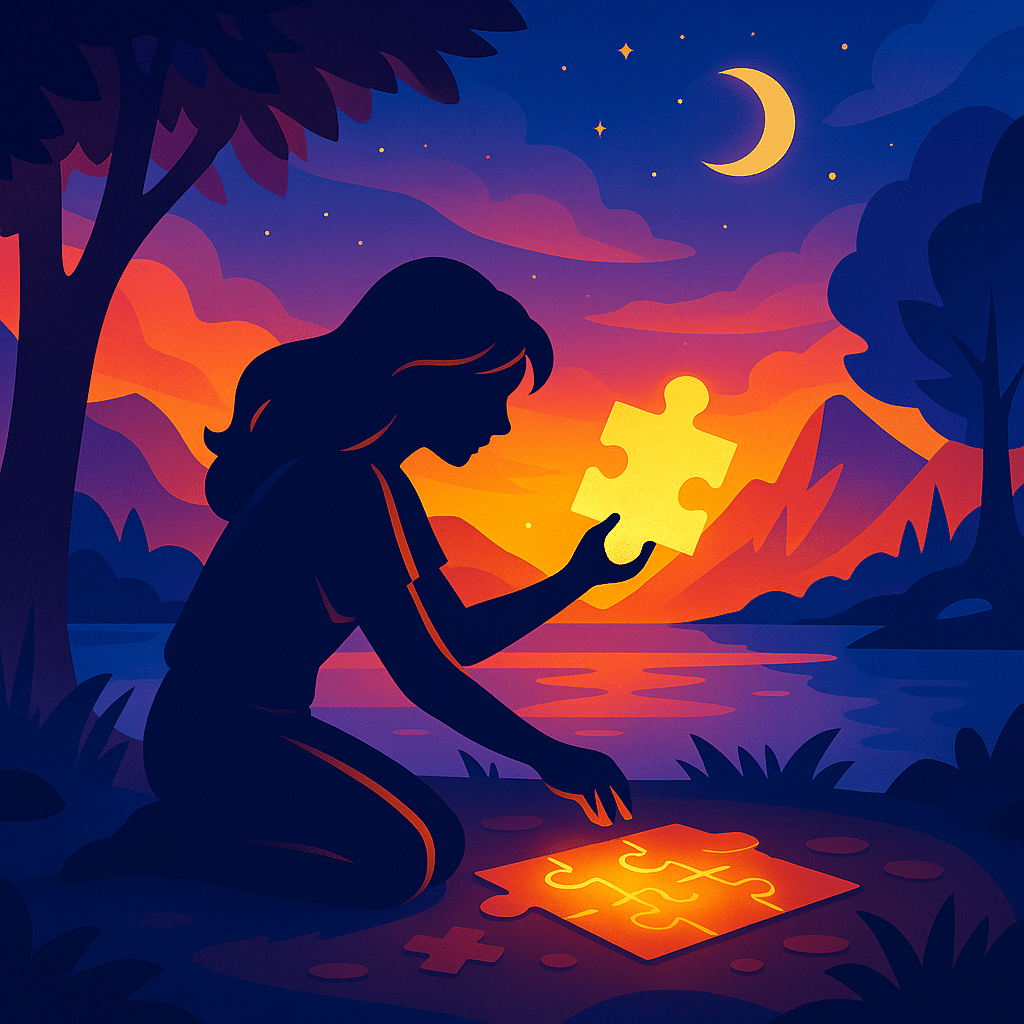
Contrast shapes the early and mid-game puzzle experience. It helps puzzlers quickly sort pieces and identify anchor points.
1. Easier Piece Grouping
High contrast between major regions — sky vs. mountains, foliage vs. water, characters vs. background — makes it easier to group pieces by color or texture. This speeds up the initial sorting phase.
2. Clear Separation of Objects
Shadows and outlines help define boundaries. Even subtle contrast can turn a chaotic, detailed image into solvable segments.
3. Reduced Eye Fatigue
Low-contrast puzzles require constant squinting and close inspection. Consistent, well-designed contrast keeps the experience enjoyable and comfortable for longer sessions.
Example: Night Scenes
Night-themed puzzles often use moonlight, lanterns, or glowing magical elements to maintain clarity. Without these lighting cues, dark scenes become nearly impossible to complete.
How Lighting Shapes the Puzzle Experience
Lighting affects depth, emotion, and the entire flow of solving. Good lighting enhances readability even in complex scenes.
Guides the Player’s Eye
Highlights draw attention to important areas, while shadows create structure. A well-lit focal point becomes a natural starting area for puzzlers.
Creates Depth and Dimension
Three-dimensional lighting effects make pieces more recognizable. Gradients, rim lighting, and atmospheric depth all support visual clarity.
Enhances Color Differentiation
Soft lighting can enrich colors without blending them. Warm lighting creates cozy transitions, and dramatic lighting produces sharp contrasts perfect for sorting.
Contrast and Lighting: Impact on Puzzle Difficulty
The relationship between contrast, lighting, and difficulty level is important for both designers and puzzlers. Here is a quick comparison:
| Visual Feature | Effect on Difficulty | Best For |
|---|---|---|
| High Contrast | Easier sorting, stronger boundaries | Beginners and casual puzzlers |
| Low Contrast | Increased complexity and slower progress | Experienced puzzle solvers |
| Bright Lighting | Clear visibility, improved color separation | All skill levels |
| Dim or Moody Lighting | Greater challenge and more subtle transitions | Advanced puzzlers seeking depth |
How Puzzle Designers Use Contrast and Lighting Intentionally
Puzzle artists don’t rely on guesswork. They craft images that maintain clarity even when divided into hundreds or thousands of irregular pieces.
Creating Natural Focal Points
Bright highlights often surround key figures or objects. This makes certain pieces instantly recognizable and gives solvers satisfying “aha!” moments.
Balancing Dark and Light Areas
A puzzle that is too dark or too bright in large areas becomes visually monotonous. Great artwork alternates between zones of soft light and stronger shadow.
Using Contrast to Add Personality
Bold contrast makes the puzzle feel energetic; soft contrast creates a calming effect. Designers select lighting styles to match the theme and mood of the artwork.
Tips for Choosing a Puzzle With Good Contrast and Lighting
If you want a rewarding and smooth solving experience, pay attention to these features when selecting your next puzzle:
- Look for artwork with visible light sources or clear shading.
- Avoid puzzles that appear overly dim or washed out.
- Check for strong differentiation between major sections of the image.
- Prefer images with a mix of soft gradients and sharp highlights.
- Choose puzzles that feel readable at a glance — a good sign of smart lighting design.
अंतिम विचार
Contrast and lighting are essential for both the beauty and usability of puzzle artwork. They shape how puzzlers perceive the image, organize their approach, and enjoy the final assembly. By understanding these visual tools, you can better appreciate the craftsmanship behind great puzzles and choose designs that offer clarity, excitement, and artistic depth.
प्रातिक्रिया दे